You spent weeks finding the right photographer — and then stood frozen in front of your closet the night before. That gorgeous floral top you love? It might create a buzzing visual effect on camera that draws every eye away from your face. That matching family set? It could flatten the whole image into a wall of identical color.
Knowing how to pick outfits for photoshoots isn’t just about looking cute. It’s about understanding how a camera sensor reads color, contrast, and pattern differently than your eye does.
You’ll get a clear breakdown of what colors actually photograph well, which patterns to skip, and exactly what to wear depending on your session type. Start with the most important part:
Why Your Outfit Matters More Than You Think
Most people treat outfit selection as a style decision. Photographers know it’s a technical one.
Your camera doesn’t see the world the way you do. It compresses tones, struggles with extreme contrast, and can’t retain detail in oversaturated color the way your eye can. What looks vibrant in your mirror can look blown-out or visually chaotic in a RAW file.
How Cameras Read Colors Differently Than Your Eyes
Digital sensors are designed around a limited dynamic range. A bright red dress, for example, can clip in highlights and lose all texture — leaving a flat blob of color instead of a garment.
Outfits in small repeating patterns create chromatic aberration on camera, producing a visual buzz effect that distracts from your face and expression. This phenomenon — sometimes called moiré — is common with fine herringbone, tight plaid, or micro-stripe fabrics.
Understanding this upfront saves you from a shoot-day surprise. Here’s where it gets more practical:
Start With the Right Colors for Your Photoshoot Outfit
Color choice is the single highest-impact decision you’ll make for your photoshoot wardrobe.
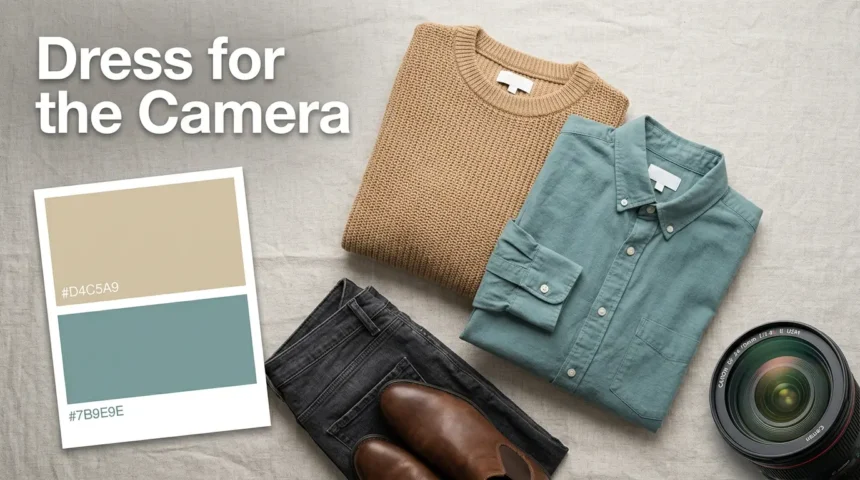
Neutral and muted tones photograph consistently well because digital sensors struggle to retain detail in highly saturated, bright colors. Think cream, dusty sage, warm tan, slate blue, and burgundy. These tones keep the viewer’s eye on you, not your clothing.
Colors That Photograph Well (and a Few That Don’t)
Strong choices: Cream, blush pink, soft olive, navy, warm caramel, dusty rose, charcoal, and muted rust. These sit in the mid-tone range where sensors perform best.
Risky choices: Neon yellow, hot pink, bright red, and pure orange. They over-saturate easily and can cast color onto skin tones in certain lighting.
Quick tip: Pull up a photo of your shoot location and identify 2–3 dominant colors in the background. Then choose an outfit color that complements — not matches — the environment.
Matching Your Outfit Color to Your Skin Tone
Skin tone matters more than most guides admit. If you have a warm undertone (golden, peachy skin), earthy tones like burnt orange, warm brown, and olive will pop beautifully. Cool undertones (pink or bluish hue) look sharper in dusty blue, lavender, and soft grey.
But that’s only part of the picture.
How to Pick Outfits for Photoshoots Based on Shoot Type
Generic advice rarely works because different sessions have different goals. Here’s a shoot-type breakdown competitors consistently skip.
Engagement and Couple Sessions
You want chemistry to be the focus, not coordination confusion. The goal is for two people to look like they belong together without looking like a uniform.
One person picks a hero piece — a dress, a textured blazer, a patterned top — and the second person builds around that. The anchor piece method eliminates the most common couple outfit coordination mistake of going either too matchy or too mismatched.
For a first look: soft floral dress + solid navy henley. For a second outfit: fitted jeans + a cream linen button-down paired with a tailored blush top. Contrast in texture, harmony in color — that’s the formula.
Family Photoshoots
For families, stylist Audrey Holl (The Audrey Edit) recommends choosing a 3–4 color palette and assigning each family member one or two of those colors. If one child’s dress has olive, cream, and rust, those three colors become your entire family palette.
65% of families who pre-plan a coordinated color palette report being significantly happier with their final photos, according to a 2022 survey by ShootProof, a professional photography platform.
Avoid dressing everyone in identical outfits. It flattens the visual interest and removes individual personality from the frame.
Headshots and Branding Sessions
For branding photoshoots, your outfit should signal your professional identity before a single word on your website does the talking for you. A life coach might wear a soft sage blazer over a white tee. A real estate agent might choose a structured navy dress. A food blogger might go with textured cream separates.
Bring 3–4 top options in different necklines. Jewel necklines and scoop necks photograph cleanest for headshots. V-necks work but tend to read more casual.
Before you apply this, there’s one thing to check:
The Anchor Piece Method: A Simple Decision Framework
Overwhelmed by options? Use this three-step framework.
Step 1: Pull one item from your closet that you feel genuinely great in — your “anchor piece.” This could be a dress, a blazer, a pair of textured trousers, anything.
Step 2: Build every other item in your outfit around that one piece. Match or complement its colors, not compete with them.
Step 3: Hold each option up in natural light (not a bathroom mirror under fluorescent bulbs). Take a photo on your phone. If it looks good in a phone photo, it’ll look great with a professional lens.
Wearing what you genuinely feel good in translates directly into confident body language, which no styling tip can replicate in a photograph. Confidence is always the best outfit.
Patterns, Fit, and What to Avoid
A few firm rules that save most people from regret:
Patterns to avoid: Tight herringbone, micro-stripes, fine plaid, and any repeat smaller than a dime. These create moiré (the visual buzz effect mentioned earlier). Large, loose patterns are generally fine.
Fit matters more than style. Clothes that are too loose or too tight both create unflattering lines on camera. Aim for fitted, not tight. Structured, not boxy.
Skip logos and text. Even a small brand logo on a chest pocket pulls focus. Your photos are about you, not the brand.
Bring a backup. Weather shifts, spills happen, and sometimes an outfit that looked great in your bedroom reads flat against your shoot location. Pack one alternative.
Sound familiar? Here’s where most guides get this wrong: they tell you what to wear without telling you why it matters. Now you have both.
Frequently Asked Questions
What colors should you avoid wearing for a photoshoot?
Avoid neon tones, bright red, and pure white in high-contrast sunlight. These shades are hardest for cameras to expose correctly and can lose all fabric detail. Stick to mid-toned muted colors for the most consistent results.
Should couples match outfits for photos?
No — couples should coordinate, not match. Identical outfits flatten visual interest and can make photos look stiff. Choose a shared color palette of 2–3 tones and let each person express their individual style within it.
How many outfits should I bring to a photoshoot?
Bring 2–3 outfits for most sessions. One should be your primary look, one a casual backup, and one a “just in case” option. More choices give your photographer flexibility and give you more variety in your final gallery.
What patterns look bad in photos?
Fine repeating patterns — micro-stripes, tight herringbone, small checks — photograph poorly because cameras can’t resolve the tiny detail, creating a visual moiré effect. Opt for solid colors, large-scale prints, or simple textures like linen and denim instead.
Final Thoughts on Photoshoot Outfit Planning
The best photoshoot outfit isn’t the trendiest one in your closet — it’s the one that fits well, photographs cleanly, and makes you feel like yourself.
Three steps to take before your next session:
- Today (5 minutes): Open your closet and identify your anchor piece — the one item you feel best in.
- This week: Hold your top 2–3 outfit options under natural light and take phone photos. Eliminate anything that looks flat or busy.
- Before the session: Check your shoot location online and confirm your outfit colors complement (not clash with) the background.
The photoshoot you’ve been overthinking is more straightforward than most guides make it — once you know how your camera actually sees.